
24 hour blood pressure monitor
A cuff that records your blood pressure through a normal day.
At a glance
- How long
- 24 hours, worn at home
- Readings
- Usually every 30 minutes by day, less often at night
- Daily life
- Carry on as normal, but no bath, shower or swimming
- Your part
- Keep your arm still while the cuff inflates
What the test involves
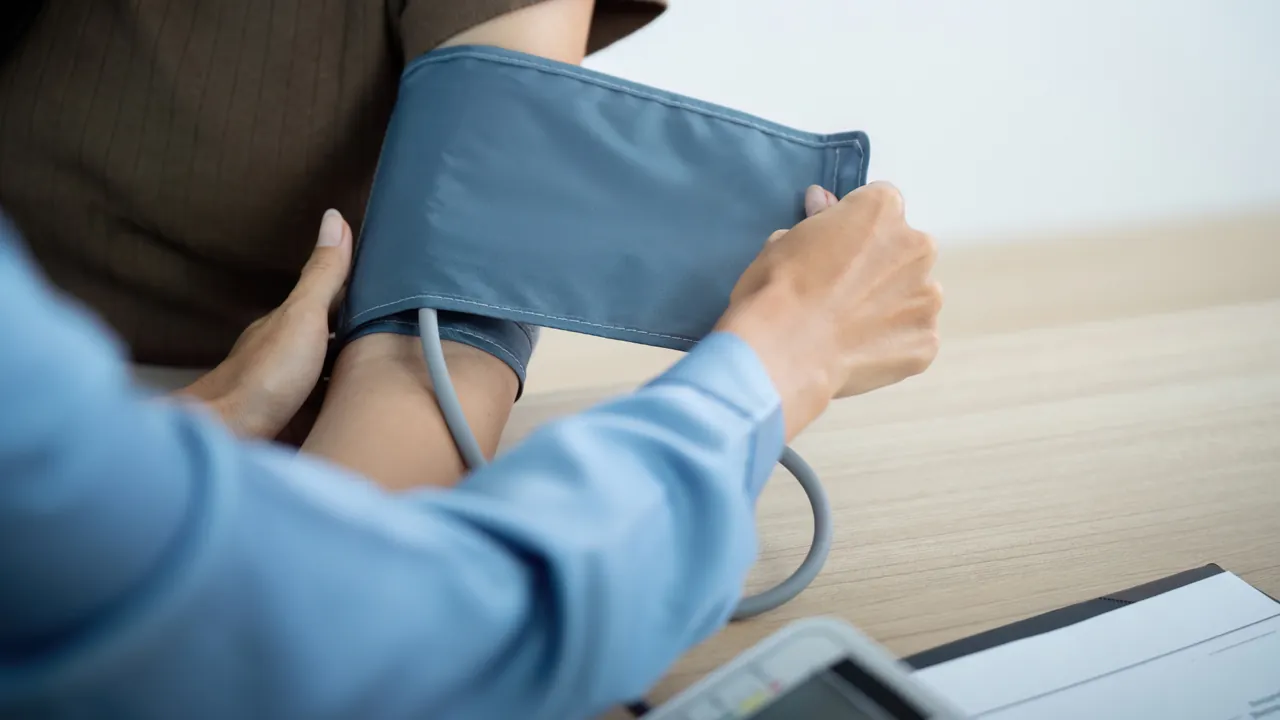
This is a portable blood pressure monitor that the patient wears for 24 hours. The blood pressure cuff that is around the arm inflates every 30 minutes while the patient goes about his/her day-to-day activities. This provides a more accurate measure of the patient's blood pressure compared to a one-off recording measured at the GP's surgery.
This is particularly useful if there is any doubt about the patient's blood pressure readings (the 'white coat syndrome') or sometimes to assess the response to treatment. However patients are strongly encouraged to buy their own blood pressure machine and to take regular recordings at home.
Tests are charged by the hospital that carries them out.
Why you might need a 24 hour blood pressure monitor
High blood pressure does not usually cause symptoms, but it raises the risk of stroke and heart disease, so it needs measuring accurately. A single reading in a surgery can be misleading, especially if you feel anxious there, the so-called white coat effect.
For that reason NICE, which advises the NHS, recommends a 24 hour (ambulatory) blood pressure recording to confirm high blood pressure when a clinic reading is between 140/90 and 180/120. It is also used to see how well blood pressure treatment is working across a whole day and night. High blood pressure is one of the main cardiac risk factors.
Wearing the monitor
A cuff goes around your upper arm, connected to a small recorder. You wear it home and hand it back the next day. It inflates by itself, usually every 30 minutes during the day and less often at night, and squeezes your arm for a few seconds, which can feel uncomfortable until the air releases.
Carry on with your normal day. When the cuff starts to inflate, keep still and quiet with your arm relaxed and straight, sitting down if it is safe to. You cannot bath, shower or swim while wearing the monitor.
How the results are read
The readings taken while you are awake are averaged, using at least 14 of them. If that daytime average is 135/85 or more, it confirms high blood pressure. NICE sets this threshold 5 points below the clinic one of 140/90.
Checking your blood pressure at home
Patients are strongly encouraged to buy their own blood pressure machine and take regular readings at home. Take two readings a minute apart, morning and evening, and write them down. When home readings are used to confirm high blood pressure, NICE suggests doing this for at least 4 days, and ideally 7. At home, 135/85 or more is considered high. Our article on managing blood pressure naturally covers what you can do day to day.
The hospital that carries out your test will send you its own instructions. If they differ from this page, follow theirs, and ask if anything is unclear.
Where this information comes from
- NICE: Hypertension in adults (NG136)
- NHS: Blood pressure test
- The Princess Alexandra Hospital NHS Trust: 24 hour blood pressure monitor
Sources checked 14 October 2026.