
ZIO ECG patch
A waterproof patch that records your heart rhythm for up to 14 days.
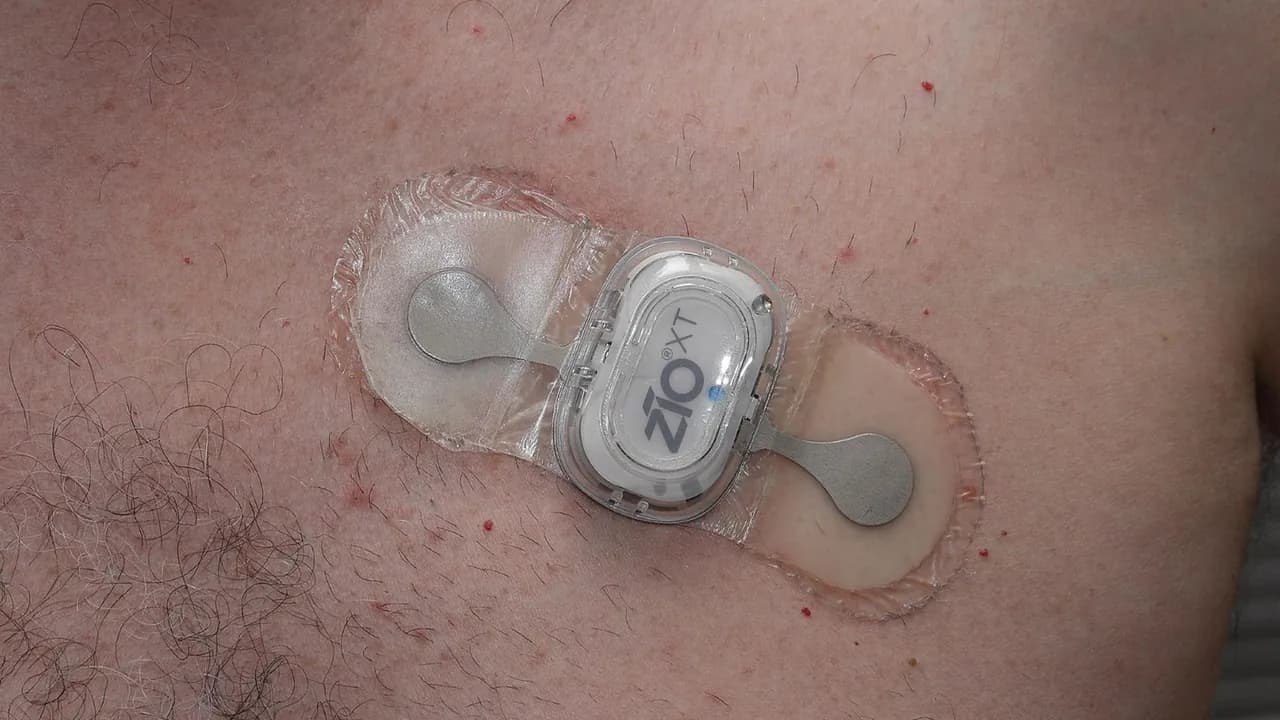
At a glance
- How long
- Up to 14 days
- Wires
- None, a single patch on the upper left chest
- Washing
- Water resistant, so you can shower
- Symptoms
- Press the button on the patch when you feel one
What the test involves
This is a new device that allows monitoring of the heart rhythm for up to 14 days. As it is waterproof it can record even during exercise and does not limit the patient's activities during the recording. It is proving very useful in detecting intermittent changes in heart rhythm.
Tests are charged by the hospital that carries them out.
Why you might need a ZIO patch
A standard Holter monitor is usually worn for 24 to 48 hours, and symptoms that come and go can easily be missed in that time. The ZIO patch records every heartbeat for up to 14 days, which gives a much better chance of catching what happens when you feel unwell. It is used for:
- palpitations that come and go
- dizziness or blackouts
- looking for atrial fibrillation that comes and goes
NICE, which advises the NHS on which treatments and tests work, has looked at the ZIO XT patch. It found that the patch is convenient and easy to wear, and that it diagnoses more heart rhythm problems than standard 24 hour Holter monitoring.
Wearing the patch
The patch sticks to the upper left side of your chest. It has no wires or leads and is worn under your clothes, so it is more discreet than a Holter monitor. Because it is water resistant, you can shower or bathe and carry on with exercise and your normal daily life while it records.
Whenever you feel a symptom, press the button on the patch. That marks the moment, so it can be matched with your heart rhythm.
Sending it back and your results
When the wearing time is over, you peel the patch off and post it back in the prepaid packaging. Each patch is used once only. The recording is analysed by accredited cardiac technicians, and a report of any rhythm problems, and of the moments you pressed the button, goes to Dr Vasudeva, who interprets the findings and goes through them with you.
For symptoms that happen more often, a shorter recording with an ambulatory ECG monitor may be all that is needed.
The hospital that carries out your test will send you its own instructions. If they differ from this page, follow theirs, and ask if anything is unclear.
Where this information comes from
Sources checked 14 October 2026.
Symptoms this test can help investigate
- PalpitationsPalpitations that feel like fluttering or pounding, and which occur at rest or with activity, are linked to common triggers but could sometimes indicate rhythm problems within the heart's electrical system.Read about palpitations
- Dizziness or blackoutsDizziness that comes on suddenly, and which may be linked to brief drops in blood pressure or vaso vagal episodes, can also sometimes signal underlying rhythm problems that need assessment to ensure a pacemaker is not required.Read about dizziness or blackouts