
CT coronary angiogram
A non-invasive scan of the heart arteries, with a calcium score.
At a glance
- How long
- The scan takes 10 to 20 minutes, the appointment 30 to 60
- Does it hurt?
- No, the dye can give a brief warm feeling
- Preparation
- No caffeine beforehand, and nothing to eat for a few hours
- Radiation
- Low, about the same as a year of natural background radiation
What the test involves
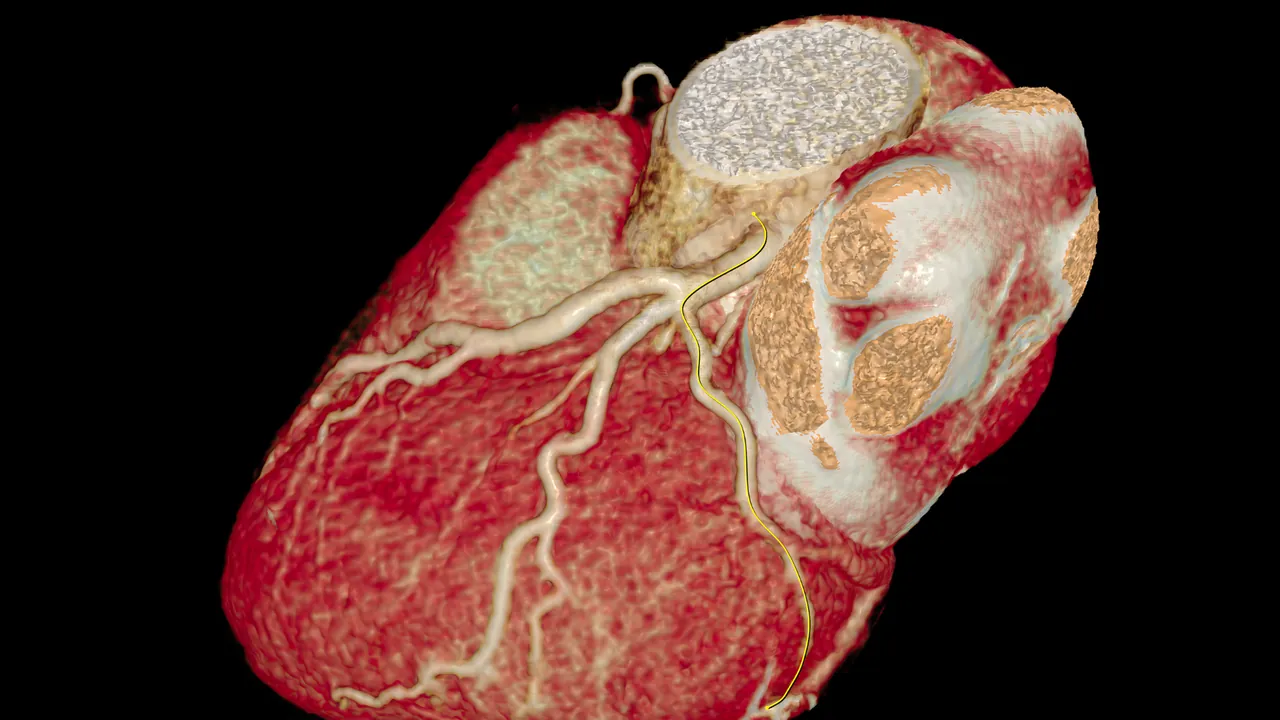
This test is a non-invasive way to assess heart arteries. The test has two parts. Firstly the test will provide a calcium score, a measure of the amount of calcium in the heart arteries, and will provide an indication of the severity of any disease of the heart arteries. Secondly some dye will be injected to assess any narrowing further.
The images are very helpful in deciding if chest pain is caused by narrowing of the heart arteries. It also helps determine if risk factors (such as high cholesterol) are causing early changes, and helps decide if we need to be more aggressive in treating these risk factors.
Tests are charged by the hospital that carries them out.
Why you might need a CT coronary angiogram
A CT coronary angiogram uses a CT scanner and a dye injected into a vein to take detailed pictures of the coronary arteries, the blood vessels that supply the heart muscle. It shows any narrowing and any fatty deposits, called plaque, in their walls.
NICE, which advises the NHS, recommends a CT coronary angiogram as the first test for many people with new chest pain that could be angina. It is also useful when you have cardiac risk factors, such as high cholesterol or a family history of heart disease, to see whether they are already causing early changes.
The calcium score
The first part of the scan needs no dye. It measures how much calcium has built up in the plaque in your heart arteries and gives it a number, the calcium score. The more calcium there is, the higher the risk of a heart attack. The score helps decide how firmly to treat risk factors such as high cholesterol.
Preparing for the scan
The hospital will send you its own instructions, which usually ask you to:
- avoid tea, coffee, energy drinks and other caffeine the day before and on the day
- have nothing to eat for a few hours beforehand
- carry on with your usual medicines unless you are told otherwise
- leave jewellery at home and avoid clothes with zips or metal clasps
Tell the team if you have asthma, kidney problems or have ever reacted to a contrast dye, or if there is any chance you could be pregnant.
What happens during a CT coronary angiogram
You change into a gown and small sticky pads are put on your chest to follow your heart rate. The pictures are clearest when the heart beats slowly and steadily, so you may be given a medicine to slow it, and sometimes a spray or tablet that widens the heart arteries.
You lie on a bed that moves through a ring-shaped scanner. The radiographer works the scanner from the next room but can talk to you throughout. You will be asked to keep still and to hold your breath for a few seconds at a time. When the dye goes in, you may feel warm for a moment, which passes quickly.
Afterwards you can get dressed, eat and drink as normal and go home. If you were given a medicine to help you relax, someone may need to drive you.
Is a CT coronary angiogram safe?
It is non-invasive: no tube is passed into an artery, so there are fewer complications, such as bleeding or bruising, than with a coronary angiogram. The radiation dose is low but the scan is still only done when it is needed. It is not suitable during pregnancy, and the dye may not be suitable for people with advanced kidney problems, severe asthma or an allergy to the dye.
If the scan shows narrowing and it is not clear whether it is limiting the blood flow, a further test may be suggested.
The hospital that carries out your test will send you its own instructions. If they differ from this page, follow theirs, and ask if anything is unclear.
Where this information comes from
- British Heart Foundation: CT scans for your heart
- NICE: Recent-onset chest pain of suspected cardiac origin (CG95)
Sources checked 14 October 2026.
Symptoms this test can help investigate
- Chest painChest pain that is aching in nature, and which is brought on by exertion (walking or other exercise), is usually referred to as angina, and can be due to a narrowing of the arteries feeding the heart muscle.Read about chest pain
- Cardiac risk factorsConcerns about risk factors such as raised blood pressure or cholesterol are common, and it is important to confirm when treatment is truly needed, using modern risk assessment methods and considering lifestyle changes before medication.Read about cardiac risk factors