
ECG
A 12 lead heart tracing, usually taken during the consultation.
At a glance
- How long
- A few minutes
- Does it hurt?
- No, it is painless
- Preparation
- None, apart from a top that is easy to take off
- Results
- The tracing is printed straight away
What the test involves
A 12 lead ECG is a heart tracing that can be undertaken during the consultation. It can provide an indication of an underlying heart rhythm problem or evidence of previous heart damage but a normal ECG does not preclude a cardiac problem.
Tests are charged by the hospital that carries them out.
Why you might need an ECG
An ECG records the rhythm, rate and electrical activity of your heart. It is usually one of the first heart tests you will have, and it can help to show:
- a heart rhythm problem, such as atrial fibrillation
- a heart rate that is too fast or too slow
- signs of a previous heart attack
- patterns that suggest strain on the heart
It is often the starting point when someone has chest pain, palpitations, breathlessness or dizziness or blackouts.
Preparing for an ECG
There is very little to do. You can eat, drink and take your usual medicines. Wear a top that is easy to take off, and do not put body lotion, oil or talcum powder on your chest on the day. A small area of chest hair may need to be shaved so the pads stick. You can ask for a chaperone to be in the room.
What happens during an ECG
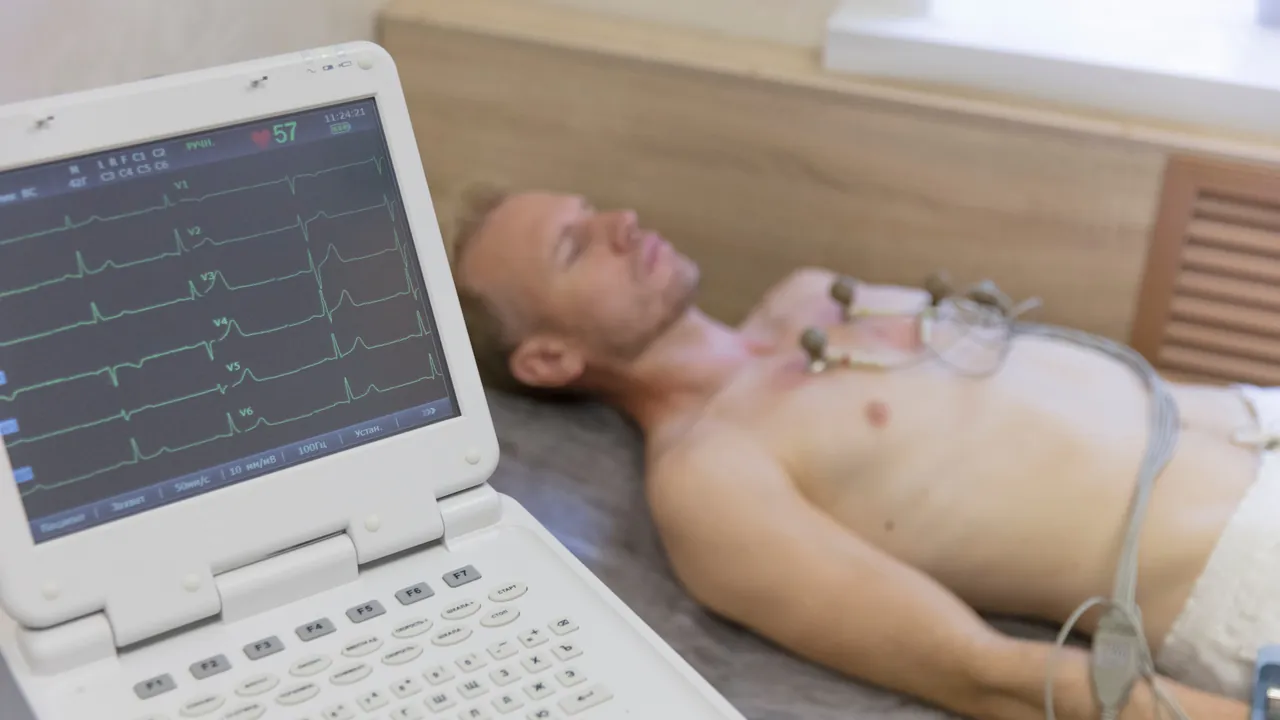
You undress to the waist and lie back on a couch. Ten small sticky pads, called electrodes, are placed on your arms, legs and chest and connected by wires to the ECG machine. You lie still and breathe normally for a few minutes, because moving can affect the tracing.
Nothing is sent into your body. The machine only picks up the electrical signals your heart already makes. Afterwards the pads are peeled off, which can be slightly uncomfortable, and some people have a mild rash where they were for a short while.
What an ECG cannot show
An ECG records your heart for a short moment only. If your symptoms come and go, the tracing may be normal simply because nothing was happening during the test, so a normal ECG does not rule out a heart problem. A longer recording with an ambulatory ECG monitor or a ZIO patch can catch symptoms that come and go.
An ECG also does not show the heart muscle or valves directly. That is the job of an echocardiogram. And an unusual ECG does not always mean something is wrong with your heart, which is why the result is always read alongside your symptoms and examination.
The hospital that carries out your test will send you its own instructions. If they differ from this page, follow theirs, and ask if anything is unclear.
Where this information comes from
Sources checked 14 October 2026.
Symptoms this test can help investigate
- PalpitationsPalpitations that feel like fluttering or pounding, and which occur at rest or with activity, are linked to common triggers but could sometimes indicate rhythm problems within the heart's electrical system.Read about palpitations
- BreathlessnessBreathlessness that develops with activity, and which feels out of proportion to your level of exertion, is often linked to heart failure, where the heart does not pump efficiently due to valve disease, rhythm problems, or previous heart damage.Read about breathlessness
- Dizziness or blackoutsDizziness that comes on suddenly, and which may be linked to brief drops in blood pressure or vaso vagal episodes, can also sometimes signal underlying rhythm problems that need assessment to ensure a pacemaker is not required.Read about dizziness or blackouts
- FatiguePersistent tiredness that is not explained by activity levels, sleep, or recent illness can sometimes be linked to heart conditions.Read about fatigue